




For many families, night-time is when the worry bites hardest. It's one thing to know a loved one has support during the day: but what happens at two in the morning, when they need the bathroom, feel disoriented, or simply want the reassurance of a familiar voice? It's one of the most common questions we're asked, and an important one to get right.
The short answer is yes: night-time support is part of live-in care. But how it works depends on the level of help someone needs through the night, and understanding that will help you choose exactly the right arrangement. Let's walk through it.
The reassuring starting point
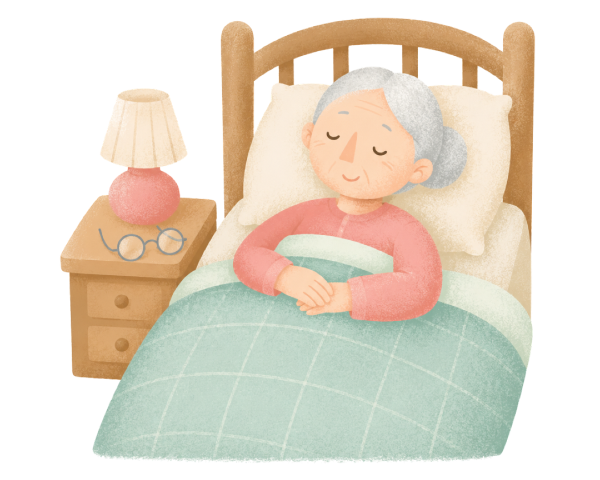
Because a live-in carer actually lives in the home, help is never far away day or night. Unlike visiting care, where a carer comes and goes at set times, your live-in carer is there overnight, in the same house, ready to respond if they're needed. For most families, that constant presence is one of the greatest comforts live-in care offers: the knowledge that someone trusted is always close by.
So if your loved one occasionally wakes in the night and needs a hand, a live-in carer is there to provide it.
How night-time support usually works
In a typical live-in arrangement, the carer sleeps at night but remains on hand to help when needed. If the person they're caring for wakes, the carer can assist with things like:
- Getting to and from the bathroom safely
- Repositioning in bed for comfort
- A reassuring presence during moments of confusion or anxiety
- Help with night-time medication
- Responding quickly if there's a fall or a problem
For someone whose needs in the night are occasional, say, needing help once or twice, this is exactly what live-in care is designed to provide, and it works beautifully.
The important bit: why carers need their rest
Here's the part that's worth understanding honestly, because it shapes everything. A live-in carer needs a proper night's sleep themselves. That isn't a limitation so much as a safeguard: a well-rested carer is a safe, attentive, and warm carer during the day, when most care happens. A carer who is up all night, every night, simply couldn't provide good care for long, and your loved one's wellbeing depends on theirs.
This is why standard live-in care suits people who need only occasional night-time help, commonly up to around twice a night. The carer can comfortably respond to those moments and still get the rest they need.
What live-in care on its own isn't designed for is constant, all-night attention: someone awake and actively monitoring or assisting throughout the night. And that's where a different arrangement comes in.
When more night-time support is needed: waking night care
Some people genuinely do need frequent or continuous support overnight. This might be the case for someone with advanced dementia who is awake and restless at night (sometimes called "sundowning"), someone with significant medical needs, or anyone who needs regular repositioning, monitoring or assistance through the small hours.
In these situations, the answer is what's known as waking night care, where a carer stays awake and on duty through the night, specifically to provide that support. Because the daytime live-in carer still needs to rest, meeting heavier night-time needs usually means a higher level of care and additional, dedicated night support, so that someone is always available and everyone stays well-rested. The result is round-the-clock care with no gaps and no one stretched too thin.
The key message is simply this: if night-time needs are significant, they can absolutely be met: it just calls for the right setup, which is well worth getting clear from the start.
How Edyn handles night-time care
We build night-time support into our care packages, and the level reflects what each person needs.
Our Standard live-in care includes some night-time care, typically twice a night or less, which suits people who need only occasional help after dark. For those with greater needs, our Specialist and Advanced packages are designed around more involved support, with care planned so there's never a gap in cover. Where someone needs full waking-night support, we'll talk you through exactly how that can be arranged.
The best part is that you don't have to figure out which you need. During your care assessment, our Care Manager looks carefully at night-time needs alongside everything else, and recommends an arrangement that keeps your loved one safe and comfortable around the clock. You can read more in our guides to the care assessment and the cost of live-in care.
How do you know what's needed?
If you're unsure how much night-time support your loved one needs, a few questions can help:
- Do they currently wake in the night, and if so, how often?
- Do they need help getting to the bathroom, or repositioning?
- Do they become confused, anxious or restless after dark?
- Do they have medical needs that require attention overnight?
- Is a family member currently losing sleep to provide this themselves?
If you recognise a pattern of frequent night-time waking, it's well worth raising — it's exactly the kind of thing we'll assess and plan around. And if a family carer is the one currently going without sleep, live-in care can lift that weight entirely.
Let's make sure the nights are covered
Peace of mind shouldn't clock off at bedtime. Whether your loved one needs the occasional helping hand in the night or fuller round-the-clock support, we'll help you put the right arrangement in place, so everyone, including you, can rest easier.
Book a free care advice call, or give us a ring on 020 3970 9900. We're always happy to talk through what night-time care could look like for your family.


Jamie Shie


10 Aug 2026
When One Spouse Becomes the Decision-Maker for the Other's Care
There are few harder moments in a marriage than the one where you realise your husband or wife can no longer make their own decisions, and that you must begin making them on their behalf. Whether it comes gradually with dementia, ...
Read guide
06 Aug 2026
The Sandwich Generation: Balancing Kids, Career and Ageing Parents
There is a name for the particular kind of exhaustion that comes from caring for your children and your ageing parents at the same time, while holding down a job in between. It is called being part of the sandwich generation, ...
Read guide

06 Aug 2026
Caring for a Parent From Abroad: Coordinating Care as a British Expat
Building a life overseas is something to be proud of. But when a parent back in the UK starts to need more support, living abroad brings a particular kind of worry, and a particular kind of guilt. You are hundreds or thousands ...
Read guide